
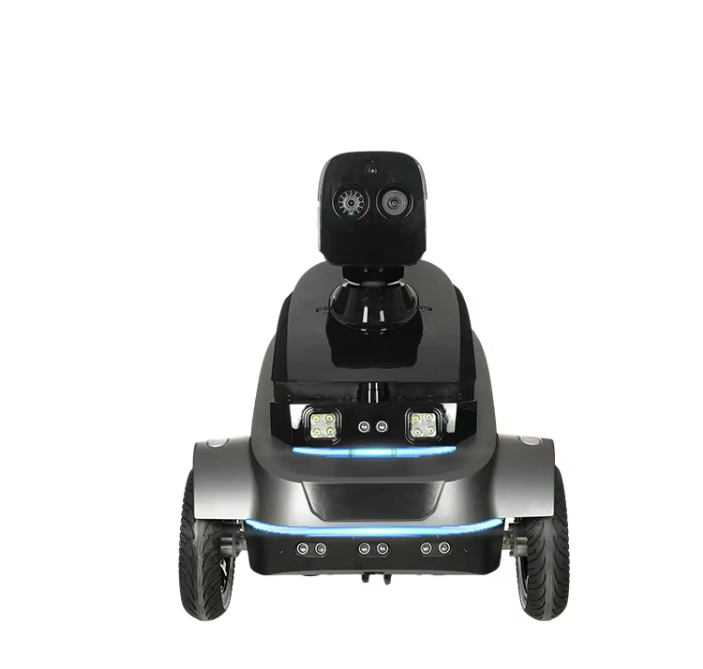
In the face of the ongoing global pandemic, maintaining cleanliness and hygiene in public spaces, particularly in hospitals, has become a top priority. One groundbreaking innovation that has emerged as a game-changer in this effort is the UV disinfection robot.
यूवी कीटाणुशोधन रोबोट को समझना
The UV disinfection robot is an advanced technological solution designed to counter harmful microorganisms effectively. These robots use ultraviolet-C (यूवी ग) light to kill or deactivate bacteria, वायरस, और अन्य रोगज़नक़, thereby ensuring a sanitized environment.
This technology is not new but its application in autonomous robots presents a revolutionary approach in combating infectious diseases. The UV-C radiation emitted by these robots damages the DNA and RNA of microorganisms, preventing them from multiplying.
Working Mechanism of UV Disinfection Robots
A UV disinfection robot works autonomously without human intervention. Equipped with sensors and cameras, these robots can navigate through rooms while avoiding obstacles. They emit concentrated UV-C light that can reach even hidden surfaces—areas often missed during manual cleaning processes.
The effectiveness of a UV disinfection robot depends on factors like exposure time and distance from the surface being cleaned. तथापि, most models are designed to maximize coverage and efficiency.
यूवी कीटाणुशोधन रोबोट का उपयोग करने के लाभ
- क्षमता: A UV disinfection robot can sanitize large areas quickly, making it efficient for regular cleaning schedules.
- सुरक्षा: चूँकि वे स्वायत्त रूप से कार्य करते हैं, these robots eliminate the need for human presence during disinfection process reducing potential exposure to dangerous pathogens.
- विश्वसनीयता: Unlike manual cleaning methods that may miss spots or be inconsistent in quality, these robots ensure thorough sanitization every time they’re deployed.
अस्पतालों में यूवी कीटाणुशोधन रोबोट
Hospitals are high-risk environments for disease transmission. This is where the UV disinfection robot can play a crucial role. By integrating these robots into their cleaning routines, hospitals can enhance infection control measures and reduce the risk of hospital-acquired infections.
इसके अतिरिक्त, in the current context of COVID-19, it’s worth noting that several studies have suggested that UV-C light can effectively deactivate SARS-CoV-2, the virus causing this disease.
निष्कर्ष
The UV disinfection robot represents a promising solution in our fight against infectious diseases. As we continue to adapt to this new world shaped by a global pandemic, such technological innovations will be crucial in ensuring public health and safety. While they cannot replace human cleaning staff entirely, they serve as valuable adjuncts in maintaining a sanitized environment – particularly in settings like hospitals where cleanliness is paramount.